
Finnish Human Rights Advocates ry (FHRA) | Human Rights Review
From unequal treatment in public services and police operations to barriers in healthcare, housing, education and access to justice, FHRA brought documented human rights concerns before the United Nations Committee on the Elimination of Racial Discrimination.
Bringing Finland's Human Rights Record Before the United Nations
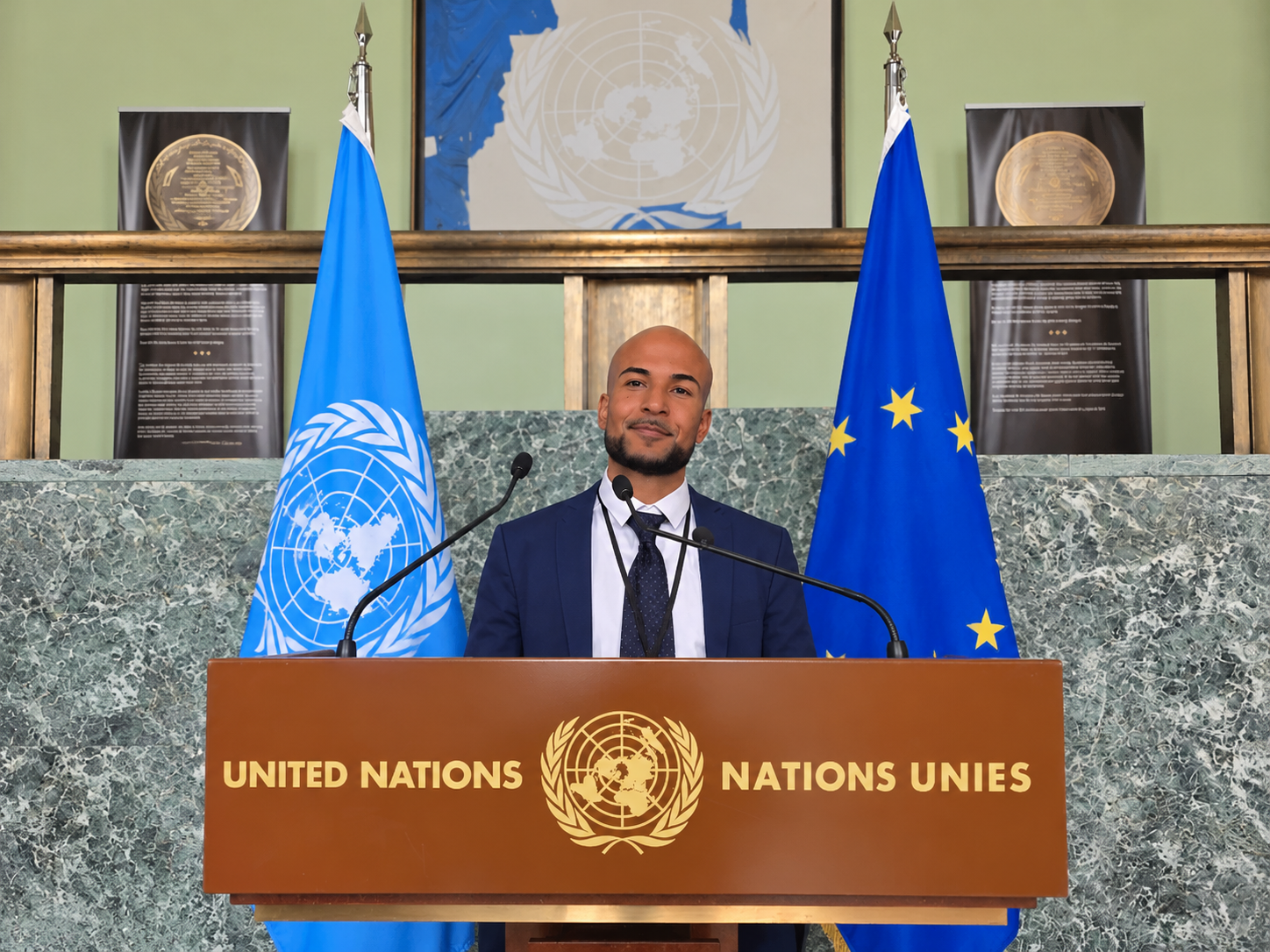
In August 2026, Finnish Human Rights Advocates ry (FHRA) contributed to the international examination of Finland's implementation of the International Convention on the Elimination of All Forms of Racial Discrimination (ICERD).
The review took place during the 118th session of the United Nations Committee on the Elimination of Racial Discrimination (CERD), held from 10 to 25 August 2026 in Geneva, Switzerland.
As an independent Finnish human rights organisation, FHRA prepared a comprehensive 20-page submission examining whether Finland's legal protections against racial discrimination are being implemented effectively in everyday life.
Our message was clear: Human rights must be protected in practice, not only guaranteed on paper.
Finland has constitutional protections, anti-discrimination legislation and international human rights obligations. Nevertheless, evidence from independent institutions, academic research and complaints reviewed by FHRA raises serious concerns about the practical ability of some individuals to enjoy those rights equally.
Our submission examined structural discrimination, access to justice, police conduct, healthcare, social protection, migration policies, political rhetoric and the protection of civil society.
Importantly, our report combined independently documented findings with anonymised individual complaints. Allegations that have not been established by courts or competent authorities were presented as concerns requiring examination, not as proven legal violations.
1. Discrimination in Education and Unequal Treatment of Complaints
One of the cases examined by FHRA concerned a student with a migrant background who reported unequal treatment by a higher education institution.
According to the complaint, the student had previously reported racist insults involving another student, but believed the institution had failed to investigate the matter adequately.
Later, when a complaint was made against the same student, disciplinary action reportedly followed.
FHRA reviewed supporting documentation and raised concerns about the consistency and fairness of institutional complaint procedures.
The case illustrates an important question: Are discrimination complaints investigated with the same seriousness, regardless of who submits them?
Although the allegations had not been judicially established, FHRA urged stronger institutional accountability, accessible complaint mechanisms and effective remedies for students experiencing discrimination.
2. Access to Justice, Legal Assistance and Fair Proceedings
Equal access to justice was another central issue in our UN submission.
FHRA examined complaints concerning access to legal assistance during police detention, interpretation in judicial proceedings and difficulties obtaining effective responses from authorities.
In one anonymised complaint, an individual alleged that repeated requests for legal assistance during police detention and questioning were not met within the relevant timeframe.
Other complaints raised concerns about whether interpretation needs were adequately addressed and whether official hearing records accurately reflected the proceedings.
These concerns are particularly significant for individuals who do not speak Finnish or Swedish fluently, or who face financial and administrative barriers when seeking legal protection.
Section 21 of the Finnish Constitution protects the right to legal protection and fair procedures. Article 6 of ICERD requires effective protection and remedies against racial discrimination.
FHRA called for improved access to interpretation, legal information, legal assistance and effective complaint procedures.
A legal right has limited value when a person cannot understand the proceedings or access the mechanisms intended to protect that right.
3. Police Conduct, Ethnic Profiling and Accountability
FHRA's submission addressed concerns about discriminatory policing and ethnic profiling.
The report referred to a 2022 judgment of Finland's Supreme Administrative Court concerning two Finnish women of Tanzanian background who were stopped by police in Helsinki.
The Court found that the intervention lacked sufficient objective justification and that skin colour and ethnic origin had influenced the police action. The measures were found to constitute unlawful discrimination.
FHRA also examined concerns surrounding the Helsinki Police Department's earlier Kuri1 operation, which involved intelligence-gathering measures affecting Roma communities.
Alongside these documented institutional cases, FHRA reviewed complaints concerning late-night police operations involving persons with migrant backgrounds.
In one anonymised complaint, an individual reported that police entered a private home during the early hours of the morning and disputed the grounds and proportionality of the intervention.
The related domestic proceedings did not establish discrimination. Nevertheless, the complaint raised questions about procedural safeguards, police accountability and public confidence in law enforcement.
FHRA recommended stronger safeguards against ethnic profiling, independent and effective accountability mechanisms, improved monitoring and continuous human rights training for law enforcement personnel.
4. Healthcare: When Language and Administrative Barriers Affect Access
Access to healthcare is a fundamental human rights concern.
FHRA's report examined how language barriers, administrative requirements, financial difficulties and increasingly digital services may affect migrants and minority communities.
Research cited in our submission identified difficulties accessing multilingual information and understanding available healthcare services.
Digitalisation can improve public services, but it can also create obstacles for individuals who lack electronic identification, sufficient digital literacy or access to information in a language they understand.
FHRA recommended improved interpretation services, multilingual healthcare information, alternative access channels and measures to reduce barriers to necessary healthcare.
Healthcare systems must be designed to serve people according to their needs, not their language, background or ability to navigate complicated administrative procedures.
5. Social Services, Housing and the Risk of Homelessness
FHRA reported concerns involving access to municipal social services and housing-related financial assistance.
In one anonymised case, a Finnish citizen with a Muslim name reported being told during a recorded telephone conversation that appointments were not provided to "immigrants".
The individual subsequently reported difficulties obtaining the requested assistance.
The allegation had not been determined by a competent authority or court. Nevertheless, the complaint raised concerns about discriminatory assumptions based on names or perceived backgrounds and the importance of equal treatment in public services.
FHRA also reviewed two anonymised complaints in which individuals reported losing accommodation following delays in processing housing-related social assistance.
These complaints demonstrate why administrative decisions must be timely, accessible and subject to effective review.
When housing assistance is delayed, the consequences may extend far beyond financial inconvenience. For someone already in a vulnerable situation, the loss of accommodation can affect health, employment, education and personal safety.
FHRA recommended effective safeguards against homelessness arising from administrative delays and stronger mechanisms for addressing discriminatory treatment in social services.
6. Migration Policies, Deportation and the Rights of Asylum Seekers
Our UN submission also examined recent changes to Finland's migration and border policies.
FHRA raised concerns about the increasing connection between employment and residence status, particularly where migrant workers may have only a limited period to secure new employment after losing a job.
Such requirements may create additional vulnerability for people already facing discrimination in recruitment or unequal working conditions.
FHRA also reviewed anonymised complaints concerning removal proceedings reportedly pursued while legal proceedings or available remedies remained pending.
Other complaints involved the consideration of individual vulnerabilities, retention of travel documents and reporting obligations.
These complaints had not been judicially established. They nevertheless highlighted the importance of individualised assessments, legal assistance, interpretation and effective remedies.
Our report further examined Finland's border security measures and concerns raised by international organisations about access to asylum procedures and the principle of non-refoulement.
FHRA recognises that states have responsibilities concerning border management and public security. However, these responsibilities must be exercised consistently with international human rights and refugee law.
Migration status must never be used to justify discrimination or the denial of fundamental procedural protections.
7. Racist Political Rhetoric and Public Responsibility
FHRA's submission examined the impact of racist rhetoric and discriminatory political discourse on minority communities.
The report discussed publicly reported controversies involving political figures, including historical statements attributed to senior politicians and incidents involving expressions perceived as discriminatory toward ethnic minorities.
Our concern extends beyond individual statements.
When discriminatory narratives become normalised in public debate, they may undermine trust in institutions and reinforce prejudice against migrants, racialised communities and religious minorities.
Article 4 of ICERD establishes obligations concerning racist propaganda and incitement, while other human rights guarantees require careful consideration of freedom of expression.
FHRA called for responsible public discourse, effective responses to unlawful racist incitement, support for victims and stronger education against racism.
Public officials have a particular responsibility to promote equality and respect for human dignity.
8. Protecting Civil Society and Human Rights Defenders
An important part of FHRA's work concerns the ability of independent organisations to operate freely and effectively.
Our report examined concerns about funding reforms that could affect organisations supporting migrants and minority communities.
FHRA also reviewed complaints involving access to banking services for organisations established or managed by persons with migrant backgrounds.
In one anonymised case, delays in opening a bank account reportedly affected an organisation's ability to receive funding and carry out its activities.
Other complaints concerned limited explanations for banking refusals and repeated documentation requests.
These complaints did not establish discriminatory banking practices. They nevertheless raised important questions about transparency and access to essential financial services.
Human rights organisations need an enabling environment in which they can support vulnerable communities, report discrimination and participate in public debate without disproportionate administrative obstacles.
Independent civil society is an essential part of democratic accountability.
9. FHRA's Participation in Geneva and Concerns About Access
FHRA's engagement with the CERD review also included an access-related incident during the August 2026 session in Geneva.
On 18 August 2026, FHRA's chairman, Moustafa Desouky, reported being denied access at the United Nations Office at Geneva's Pregny Gate following an earlier successful entry.
FHRA subsequently sought clarification concerning the status of the accreditation badge and the grounds for the access decision.
The organisation also raised concerns about transparency, procedural fairness and the ability of civil society representatives to participate effectively in international human rights processes.
This incident is distinct from the substantive discrimination cases addressed in FHRA's Finland review submission. FHRA considers that concerns about access and participation should be examined through the relevant United Nations administrative and accountability procedures.
Human rights defenders must be able to engage with international institutions through clear, fair and transparent processes.
10. What FHRA Asked the United Nations to Recommend
FHRA's submission called for practical reforms capable of improving the implementation of human rights protections in Finland.
Our principal recommendations included:
Stronger enforcement of anti-discrimination legislation and effective remedies for victims.
Improved accountability for discriminatory conduct within public institutions and law enforcement.
Accessible legal assistance, interpretation and fair administrative procedures.
Equal access to healthcare, housing, social protection and education.
Migration policies that respect non-discrimination, proportionality and effective procedural safeguards.
Stronger protection against ethnic profiling and racist hate speech.
An enabling environment for independent civil society organisations and meaningful participation by minority communities.
These recommendations reflect a central principle: equality must be measurable through people's lived experiences, not simply through the existence of legislation.
Our Commitment Beyond the UN Review
FHRA's work does not end when a report is submitted to an international institution.
Our organisation continues to provide human rights advocacy, legal guidance, community support and educational activities while promoting cooperation across borders.
We will continue documenting concerns, supporting individuals seeking remedies, engaging with relevant institutions and advocating for accountability where human rights protections are inadequate.
Our purpose is not to oppose Finland or its institutions. It is to contribute to a Finland in which institutions fulfil their legal obligations and every individual receives equal protection.
Human rights are not privileges granted according to nationality, religion, ethnicity, language or social position. They belong to everyone.
Conclusion: Human Rights Must Work in Everyday Life
The 2026 CERD review provided an important opportunity to examine the difference between legal commitments and practical realities.
FHRA brought forward research, official findings and anonymised complaints concerning education, policing, healthcare, social services, housing, migration and access to justice.
The individual complaints reported by FHRA require appropriate examination by competent authorities. They must not be treated as findings of wrongdoing where no such finding has been made.
At the same time, the wider evidence demonstrates why continued scrutiny, institutional accountability and meaningful reform are necessary.
Finnish Human Rights Advocates ry will continue its commitment to human dignity, equality and justice.
One Mission. Across Borders. Human Rights and Justice for Everyone.
About FHRA
Finnish Human Rights Advocates ry (FHRA) is an independent human rights organisation headquartered in Helsinki, Finland. Its activities include human rights advocacy, legal guidance, anti-discrimination work, youth participation, integration, cultural cooperation and international engagement.
Contact: info@finnishhumanrights.org
Website: www.finnishhumanrights.org
Source: FHRA, Submission to the Committee on the Elimination of Racial Discrimination — Finland Review, 118th Session, August 2026.
Editorial note: Individual complaints discussed in this article have been anonymised. Allegations are distinguished from established judicial findings and independent institutional conclusions.
